
 S10
S10 S10 Docking Version
 S10 Dual Screen
 S11
S11 S680
S680 T3A
T3A T3P
T3P T3P Countertop
 T3+ 2G/4G
 T8
T8 T5
T5 M5
M5 T9
T9 P5 Dynamic Code
 P5 Static Code
 P3
P3 Q31
Q31 P8
P8 P7
P7 V868
V868 V878
V878As a supplier of smart cash registers, I often get asked about the power consumption of these devices. In today's retail environment, where energy efficiency is not only cost - effective but also environmentally friendly, understanding the power consumption of smart cash registers is crucial for both retailers and suppliers like me.
Factors Affecting Power Consumption
The power consumption of a smart cash register is influenced by several factors. First and foremost is the hardware components. A smart cash register typically consists of a central processing unit (CPU), a display screen, a printer, and sometimes additional peripherals such as barcode scanners and card readers.
The CPU is the brain of the cash register, and its power consumption depends on its processing power and architecture. High - performance CPUs with multiple cores and high clock speeds tend to consume more power than their lower - end counterparts. For example, a cash register designed for large - scale supermarkets with complex inventory management and transaction processing requirements may have a more powerful CPU, which will result in higher power usage.
The display screen is another significant contributor to power consumption. Smart cash registers come with different types of displays, such as LCD (Liquid Crystal Display) and LED (Light - Emitting Diode) displays. LED displays are generally more energy - efficient than LCD displays. The size of the display also matters; larger screens usually consume more power. For instance, a Smart Touchscreen Cash Register with a large touch - sensitive screen will use more electricity compared to a smaller, non - touchscreen model.
The printer in a smart cash register can also consume a considerable amount of power, especially when it is actively printing receipts. Thermal printers are commonly used in cash registers because they are fast and reliable. However, they require a certain amount of heat to transfer ink onto the paper, which consumes energy. The frequency of printing and the length of the receipts also affect the overall power consumption related to the printer.
Peripherals like barcode scanners and card readers have relatively low power consumption on their own. But when multiple peripherals are connected and used simultaneously, the cumulative power consumption can increase. For example, a Dual Screen Cash Register that comes with additional barcode scanners and multiple card readers may use more power than a basic single - screen model.
Typical Power Consumption Ranges
On average, a basic smart cash register without too many advanced features and a small display may consume around 15 - 30 watts of power when in operation. This type of cash register is suitable for small businesses such as cafes or convenience stores with a relatively low volume of transactions.
For mid - range smart cash registers with larger displays, more powerful CPUs, and additional peripherals, the power consumption can range from 30 - 60 watts. These cash registers are often used in medium - sized retail stores where there is a need for more complex transaction processing and inventory management.
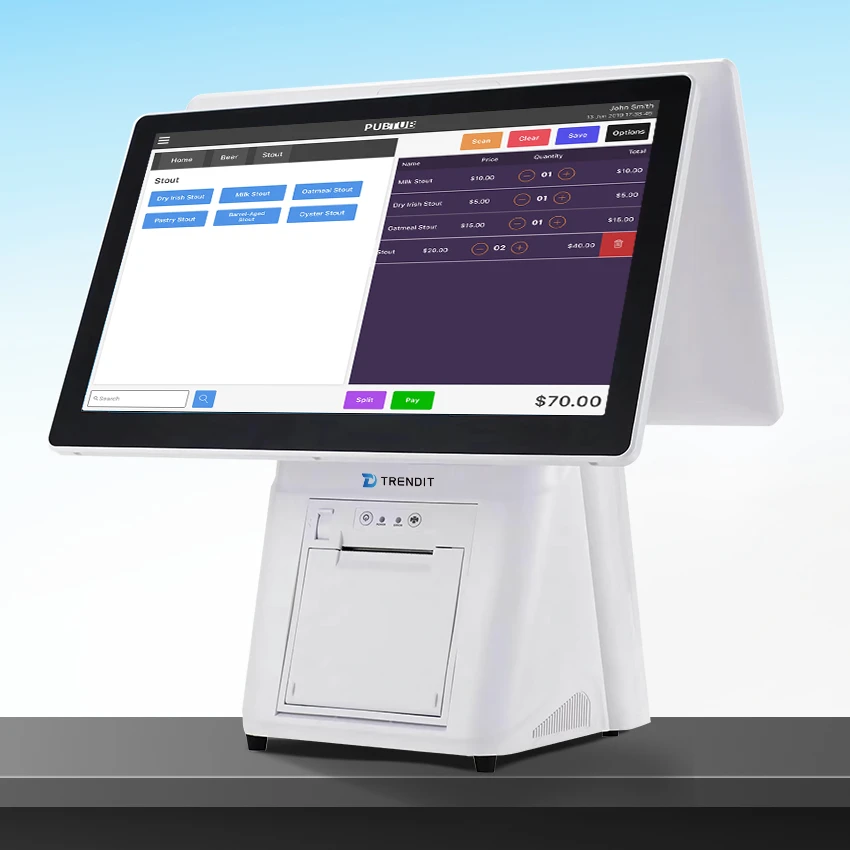

High - end smart cash registers, which are designed for large - scale supermarkets or department stores, can consume 60 watts or more. These cash registers usually have high - performance CPUs, large touchscreen displays, multiple printers, and a variety of peripherals to handle a high volume of transactions efficiently.
It's important to note that these are just rough estimates, and the actual power consumption can vary depending on the specific model, usage patterns, and the settings of the cash register. For example, if the display brightness is set to maximum, or if the printer is constantly in use, the power consumption will be higher.
Measuring and Monitoring Power Consumption
Retailers can measure the power consumption of their smart cash registers using a power meter. A power meter is a simple device that can be plugged between the cash register and the electrical outlet. It measures the amount of electricity used by the device in real - time and can also provide data on the total energy consumption over a period of time.
Monitoring power consumption is beneficial for several reasons. Firstly, it allows retailers to identify any abnormal power usage, which could indicate a malfunction in the cash register. For example, if a cash register suddenly starts consuming significantly more power than usual, it may be a sign of a hardware problem such as a faulty CPU or a short - circuit in the display.
Secondly, by monitoring power consumption, retailers can make informed decisions about energy management. They can adjust the settings of the cash register, such as reducing the display brightness or setting the printer to a more energy - efficient mode, to lower the overall power consumption. This not only helps to reduce electricity bills but also contributes to environmental sustainability.
Energy - Saving Tips for Smart Cash Registers
As a supplier, I always recommend the following energy - saving tips to my customers:
- Adjust Display Settings: Lower the brightness of the display screen to a comfortable level. Most smart cash registers allow users to adjust the display brightness easily. A lower brightness setting can significantly reduce power consumption without sacrificing the visibility of the screen.
- Use Power - Saving Modes: Many smart cash registers come with power - saving modes. These modes can put the cash register into a low - power state when it is not in use for a certain period of time. For example, the display can be set to turn off automatically after a few minutes of inactivity, and the CPU can reduce its processing speed to save energy.
- Optimize Printer Usage: Avoid unnecessary printing. Retailers can encourage customers to opt for digital receipts instead of printed ones. If printed receipts are required, use a shorter receipt format to reduce the amount of ink and energy used by the printer.
- Regular Maintenance: Keep the cash register clean and well - maintained. Dust and debris can accumulate inside the device, which can affect its heat dissipation and increase power consumption. Regularly clean the fans, vents, and other components of the cash register to ensure efficient operation.
Conclusion
The power consumption of a smart cash register is an important consideration for retailers. By understanding the factors that affect power consumption, measuring and monitoring it, and implementing energy - saving tips, retailers can reduce their electricity costs and contribute to a more sustainable environment.
If you are interested in learning more about our smart cash registers or have any questions regarding power consumption, please feel free to contact us for a detailed discussion. Our team of experts is ready to assist you in choosing the most suitable smart cash register for your business needs and help you manage its energy consumption effectively.
References
- "Energy - Efficient Retail Technology" - Journal of Retail Management
- "Power Consumption Analysis of Electronic Point - of - Sale Systems" - International Journal of Energy Research